Self funders running out of money
How long can self funders here pay, and how do we plan for the move to council funding?
House values against private fees show how long stays can be self funded.
When people use it: At admission and when a resident's savings are getting close to the limit.
How it works, step by step
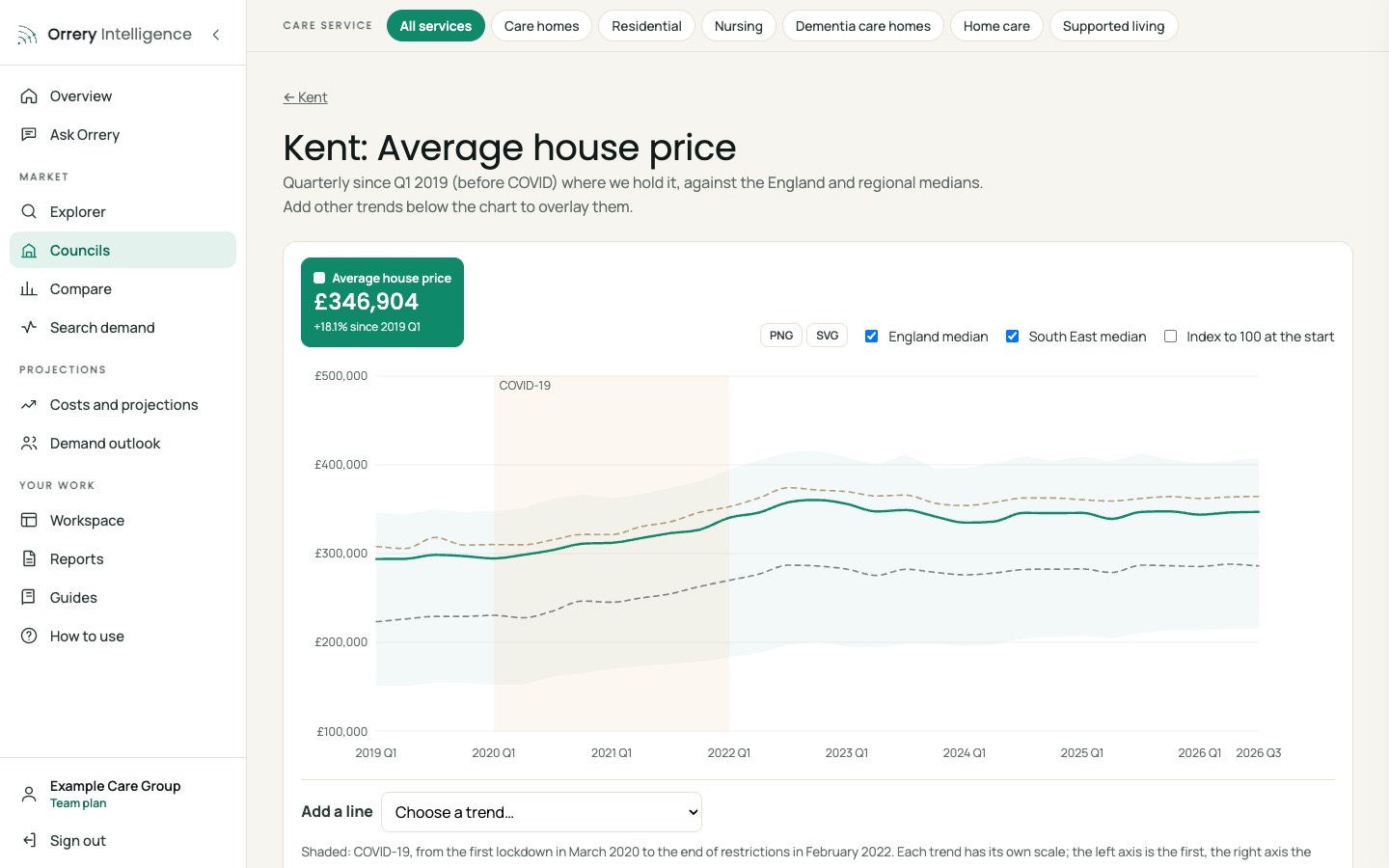
House prices and years of care
Years of care an average house pays for, and how it is changing.
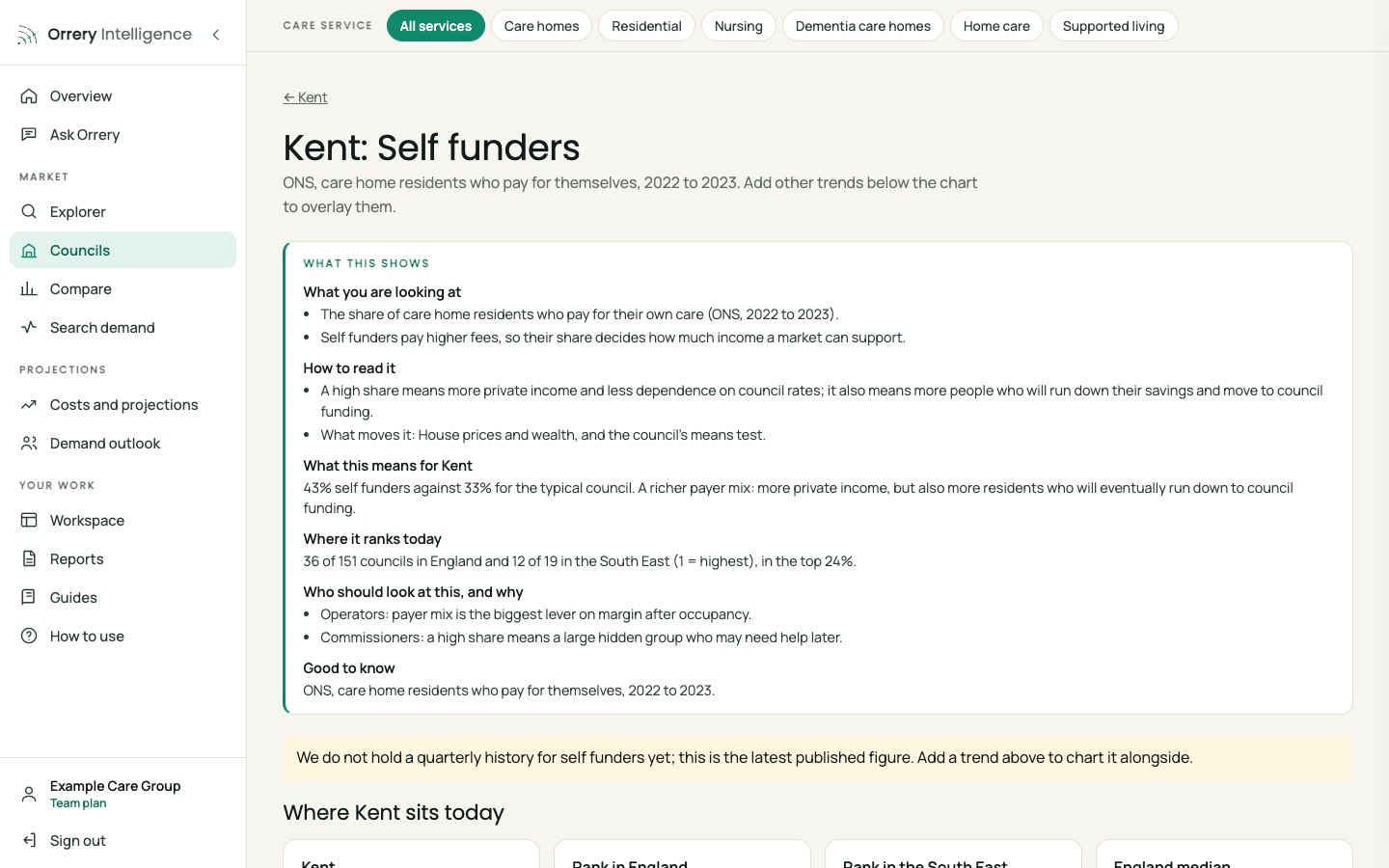
Self funder share
How many residents here pay for themselves.
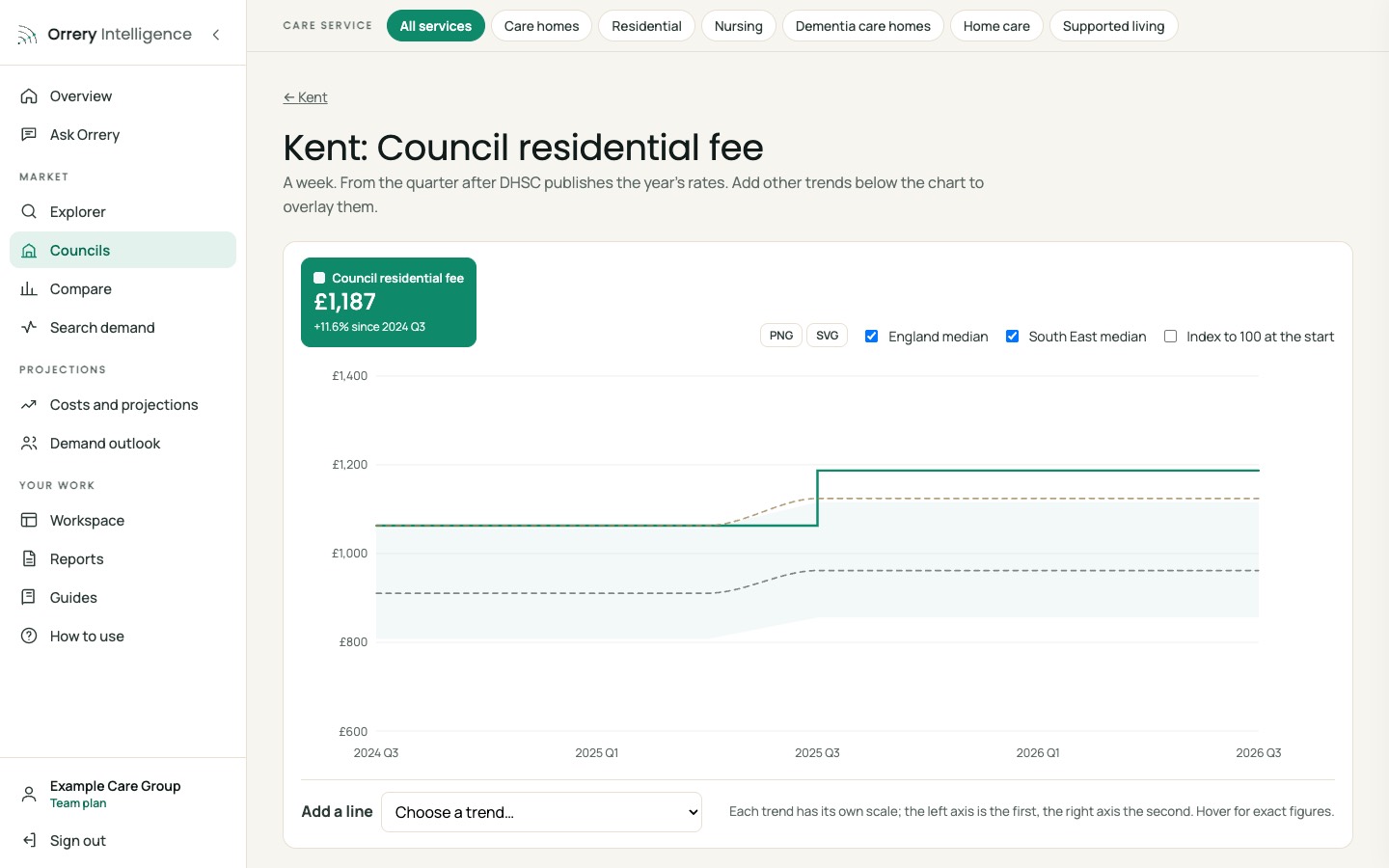
The council rate they move to
The gap between your private fee and the council rate is the top up question.
The views you will use
Ask the data in plain English
A real question and answer from Ask Orrery, the assistant inside the platform, for a care home owner in Kent (October 2026). It answers only from Orrery's data and the subscriber's own documents, and shows its sources.
An average Kent house pays for about 4.2 years of residential care. That is a simple illustration, not a prediction.
- Average Kent house price: £346,904 (HM Land Registry).
- Typical private residential fee: £1,590 a week, or £82,687 a year (Orrery guide, based on Kent's fee data).
- £346,904 divided by £82,687 gives about 4.2 years.
Things to bear in mind:
- It assumes the whole house is sold and spent on fees, with no fee rises, no other income and no costs of sale.
- Council help starts when capital falls below £23,250 (upper capital limit in England). So the real time paying privately is a little shorter.
- Nursing care fees are higher, so the period would be shorter.
Individual circumstances vary a lot. People should take independent financial advice.
- When fees rise faster than house prices, more residents reach the council limit during their stay.
Answer this for your own councils
Subscribers get every guide, chart and projection for all 153 councils, Ask Orrery, and every council report.
The Orrery platform opens to subscribers shortly. Register and we will tell you first.
Register for early access