Negotiating an individual placement fee above the council rate
What evidence supports a higher fee for this placement?
Set the council's usual rate against the cost of care, and show where it falls short.
When people use it: When the council asks you to take a resident with higher needs, or at a placement review.
How it works, step by step
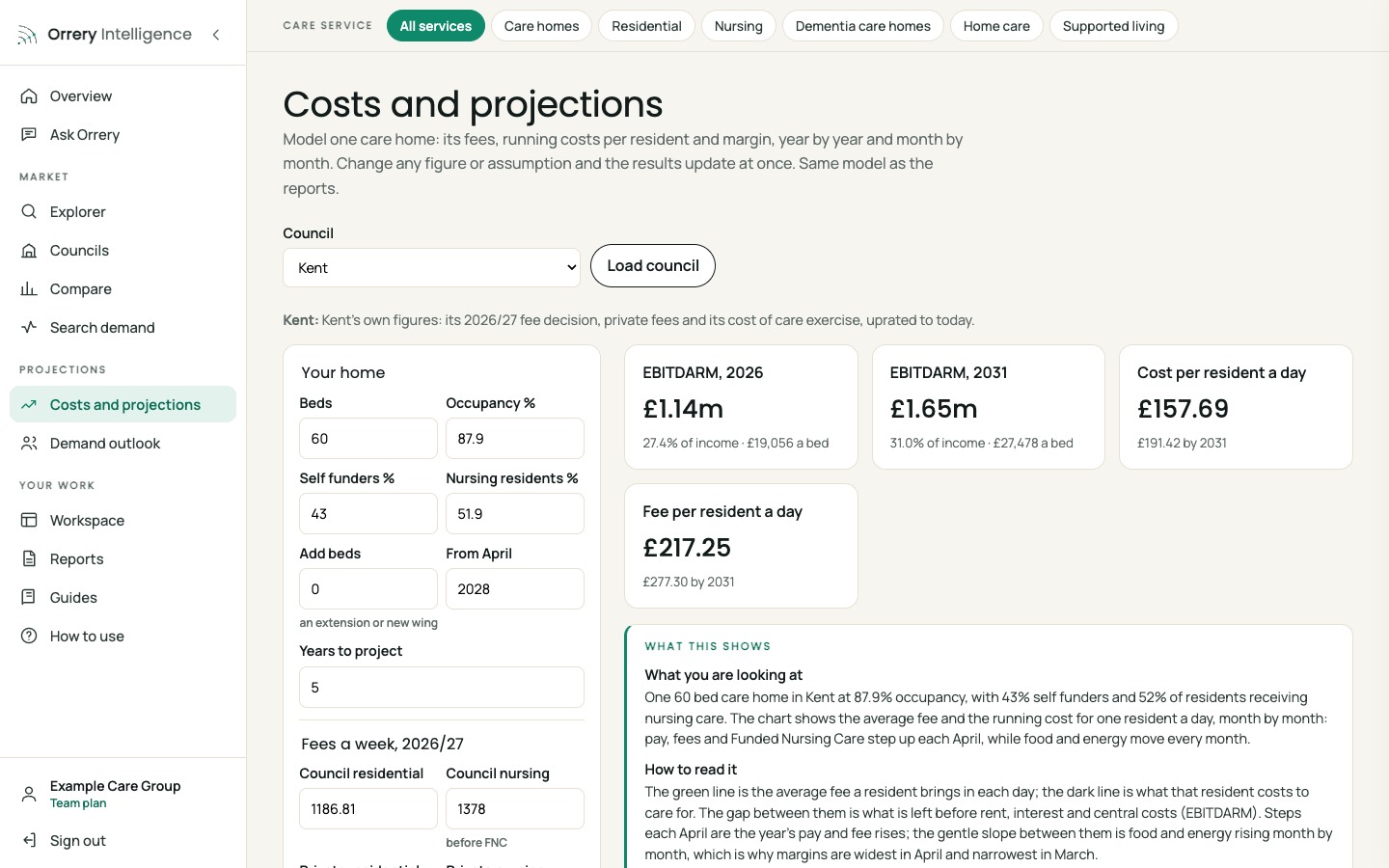
Rate against cost
Set self funders to 0% to see the margin on a council funded resident.
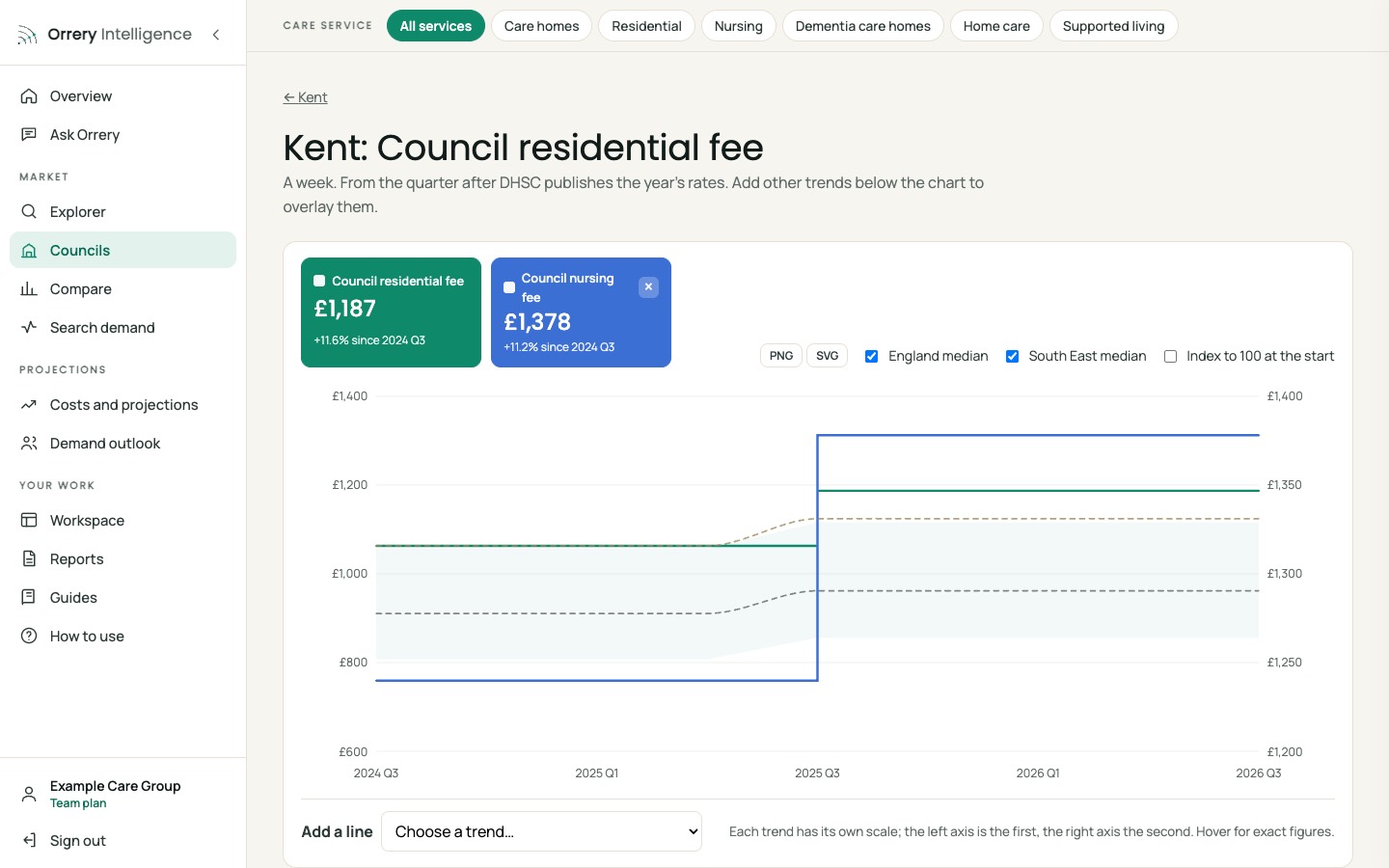
The council's rate over time
Rises against pay: the commentary sets them side by side.
The views you will use
Ask the data in plain English
A real question and answer from Ask Orrery, the assistant inside the platform, for a care home owner in Kent (October 2026). It answers only from Orrery's data and the subscriber's own documents, and shows its sources.
Probably not by much, and the data can't show it for one resident.
The usual Kent council residential fee is £1,187 a week (DHSC MSIF rates), about £169.54 a day. The Orrery cost model puts the average cost of a resident in a typical 60 bed Kent home at £157.69 a day. That leaves about £11.85 a day before rent, interest and central costs. That average blends nursing and residential residents, and the model is indicative, not a forecast.
I have no figure for the cost of a higher-needs resident. Staff are 82% of running costs, so extra care hours would use up that small gap quickly. Homes in this position usually ask for a higher individual placement fee, or look at nursing or Funded Nursing Care.
For decisions, take professional advice.
- The usual rate is for usual needs; extra staffing for higher needs has a cost you can show.
Answer this for your own councils
Subscribers get every guide, chart and projection for all 153 councils, Ask Orrery, and every council report.
The Orrery platform opens to subscribers shortly. Register and we will tell you first.
Register for early access