A new home is opening near us
How much will a new home nearby affect our occupancy, and what should we do?
Judge whether the new home will fill from unmet need or from your residents.
When people use it: When a new home is announced, gets planning permission, or registers with CQC.
How it works, step by step
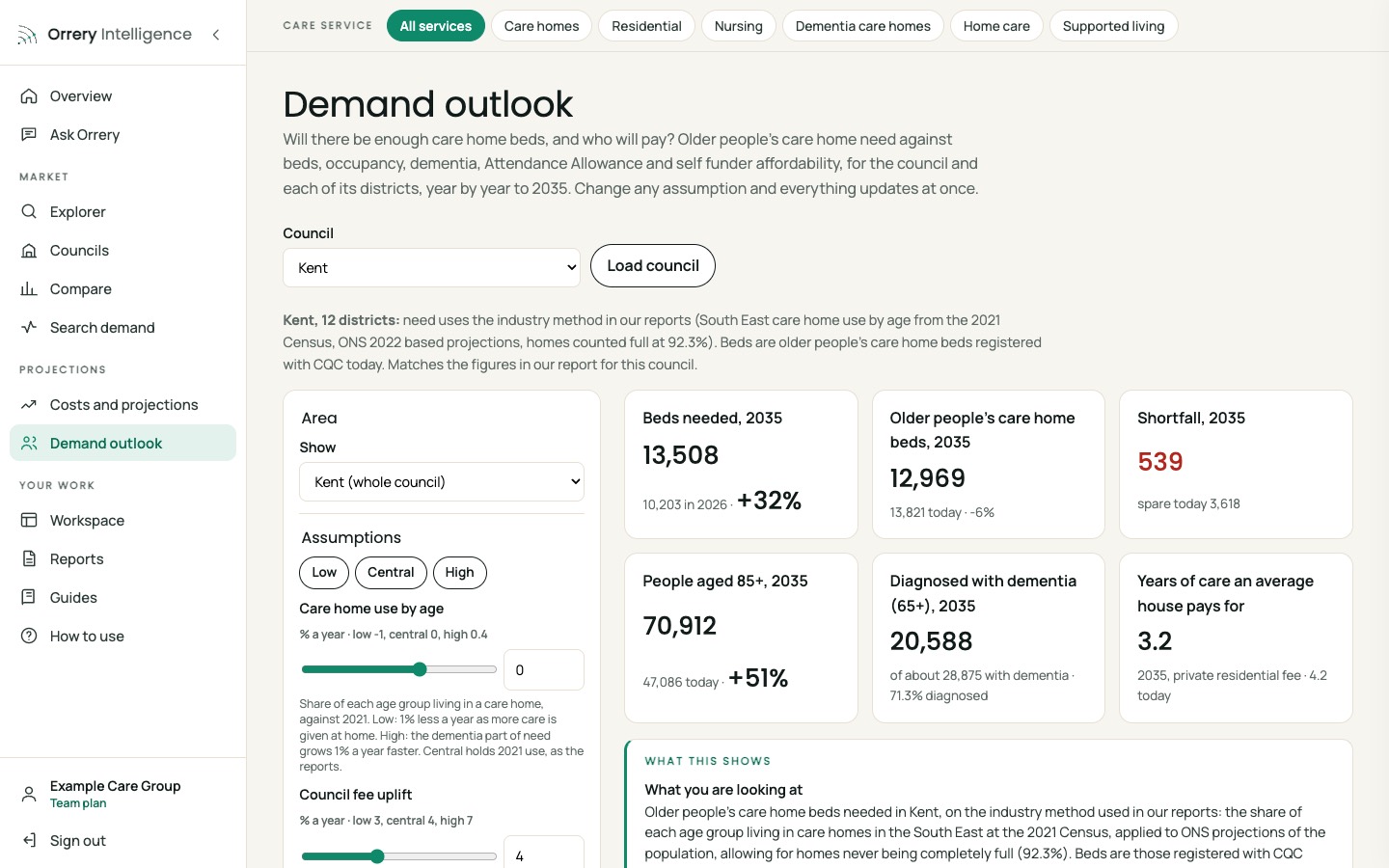
Is the district short of beds?
A district already short will absorb a new home with less impact on you.
Recent openings
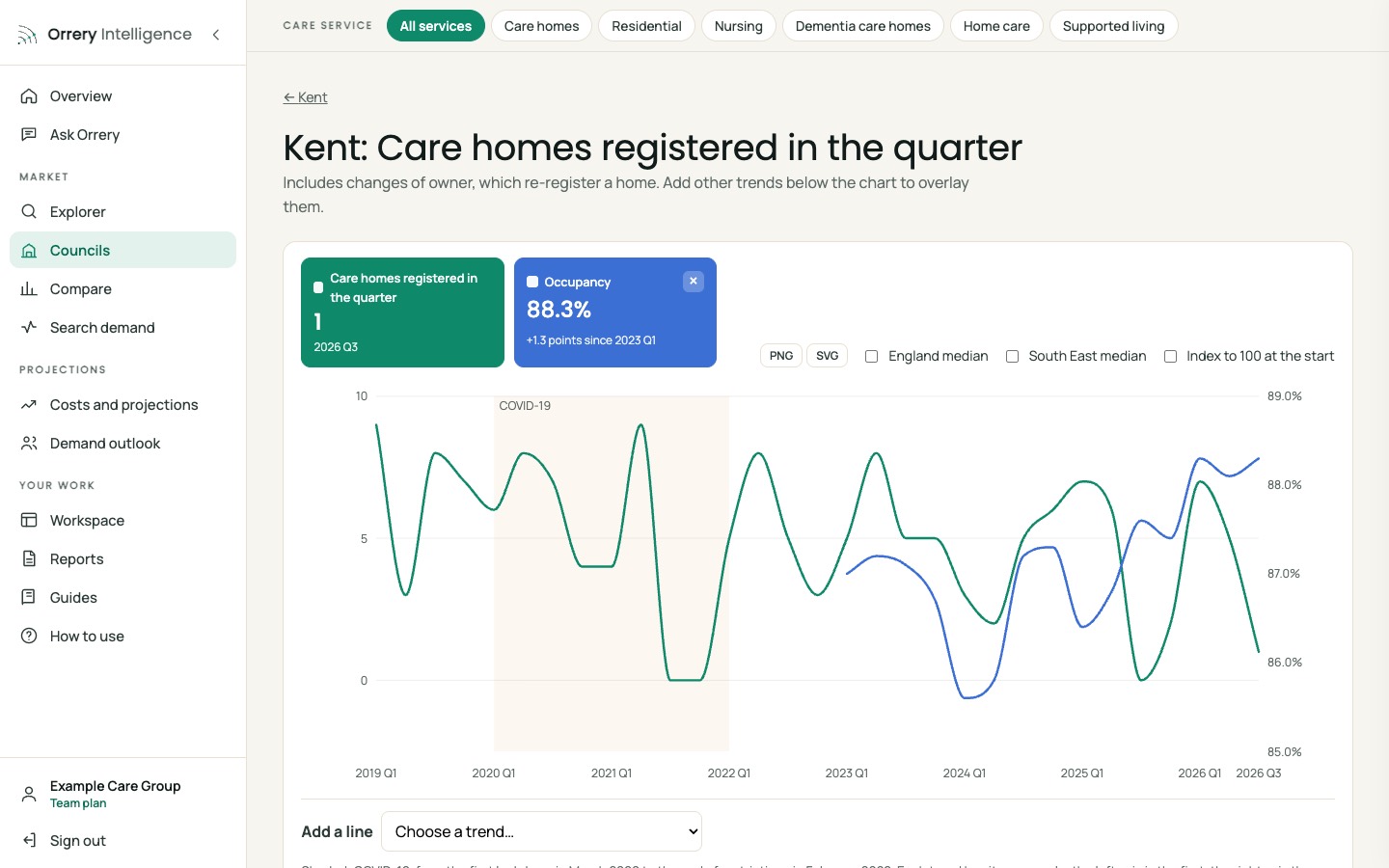
How occupancy behaved after earlier openings.
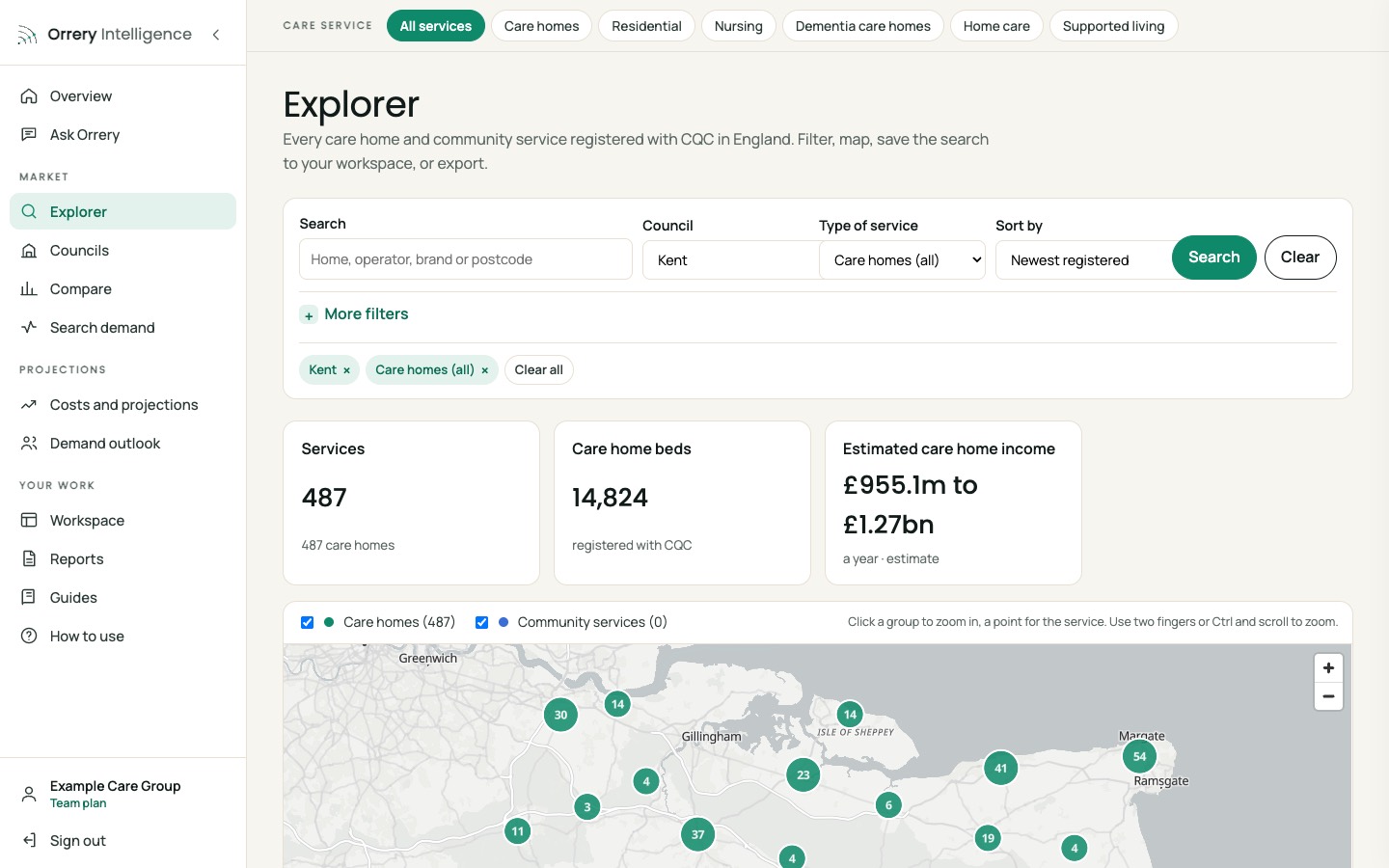
The new home
Size, type and operator of the newest homes.
The views you will use
Ask the data in plain English
A real question and answer from Ask Orrery, the assistant inside the platform, for a care home owner in Kent (October 2026). It answers only from Orrery's data and the subscriber's own documents, and shows its sources.
Be watchful rather than alarmed. I've assumed you mean older people's residential and nursing care.
Maidstone has spare beds. The Orrery demand outlook (CQC care directory, ONS) shows 409 beds to spare today and 278 in 2030. It shows 36 to spare by 2035. A 70 bed home adds to that supply, so it would have to win residents from existing homes.
Kent occupancy is 87.9% on the 12 month average (Capacity Tracker), which is in the "soft" band. The latest quarter was 88.3%.
New homes usually take one to two years to fill and target self funders first. Expect some pressure on your occupancy during that time. Each occupancy point is worth about 1% of a home's income.
People in your position usually look at the newcomer's size, type and operator, and at how they compare on quality and fees. This is a projection on stated assumptions, not a forecast. You can change the assumptions on the page.
- New homes usually take one to two years to fill and target self funders first.
Answer this for your own councils
Subscribers get every guide, chart and projection for all 153 councils, Ask Orrery, and every council report.
The Orrery platform opens to subscribers shortly. Register and we will tell you first.
Register for early access