Annual budget and business plan
What will next year cost, what will it earn, and what could go wrong?
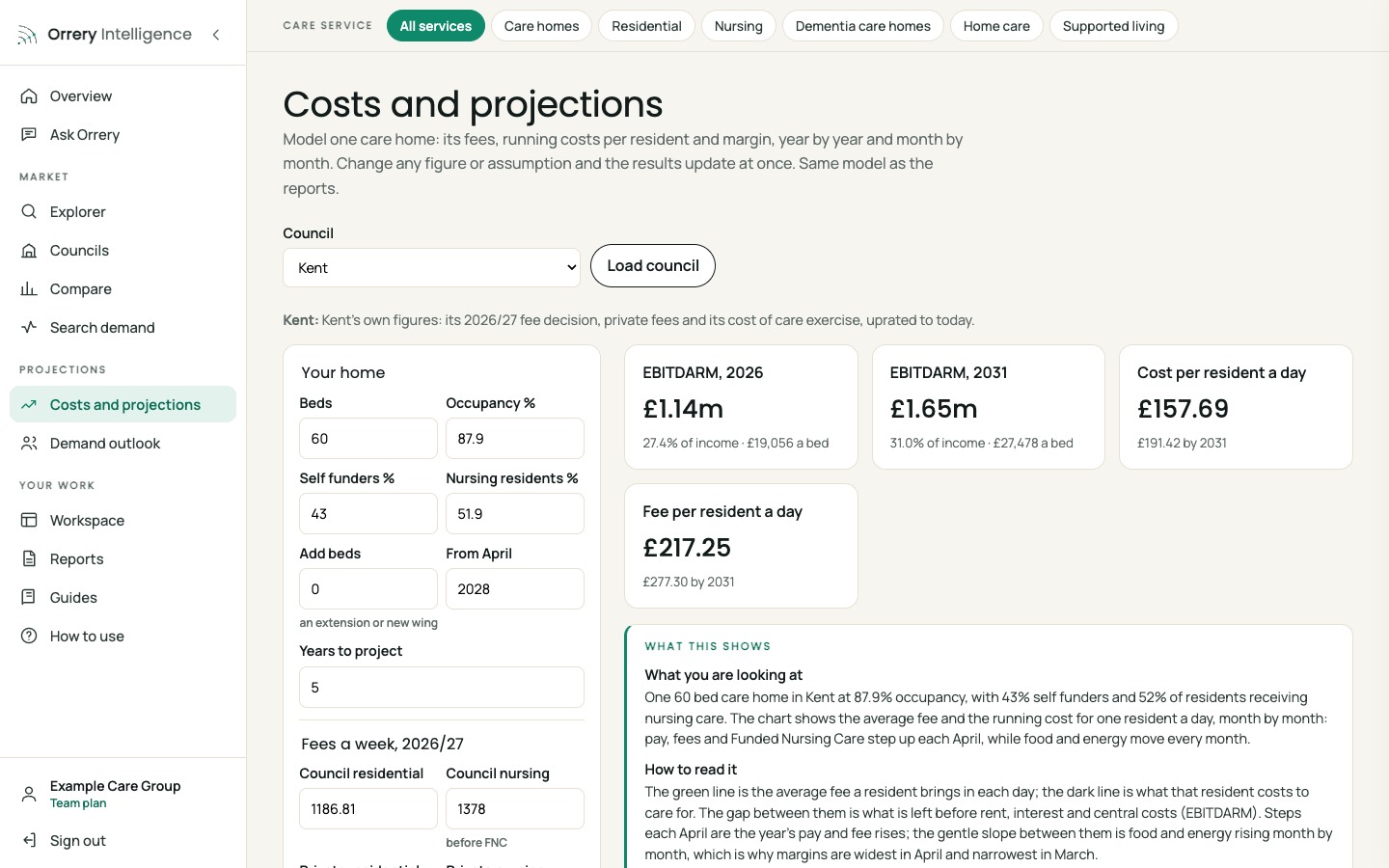
Build next year in Costs and projections, then test the risks the market data points to.
When people use it: February and March, before the new financial year.
How it works, step by step
Next year, month by month
Enter your beds, occupancy, payer mix, fees and costs. Per resident a day, week or month shows next April's step.
Test the risks
Press High for costs, lower the council uplift by a point, and drop occupancy two points: the commentary shows each change's effect.
Your market
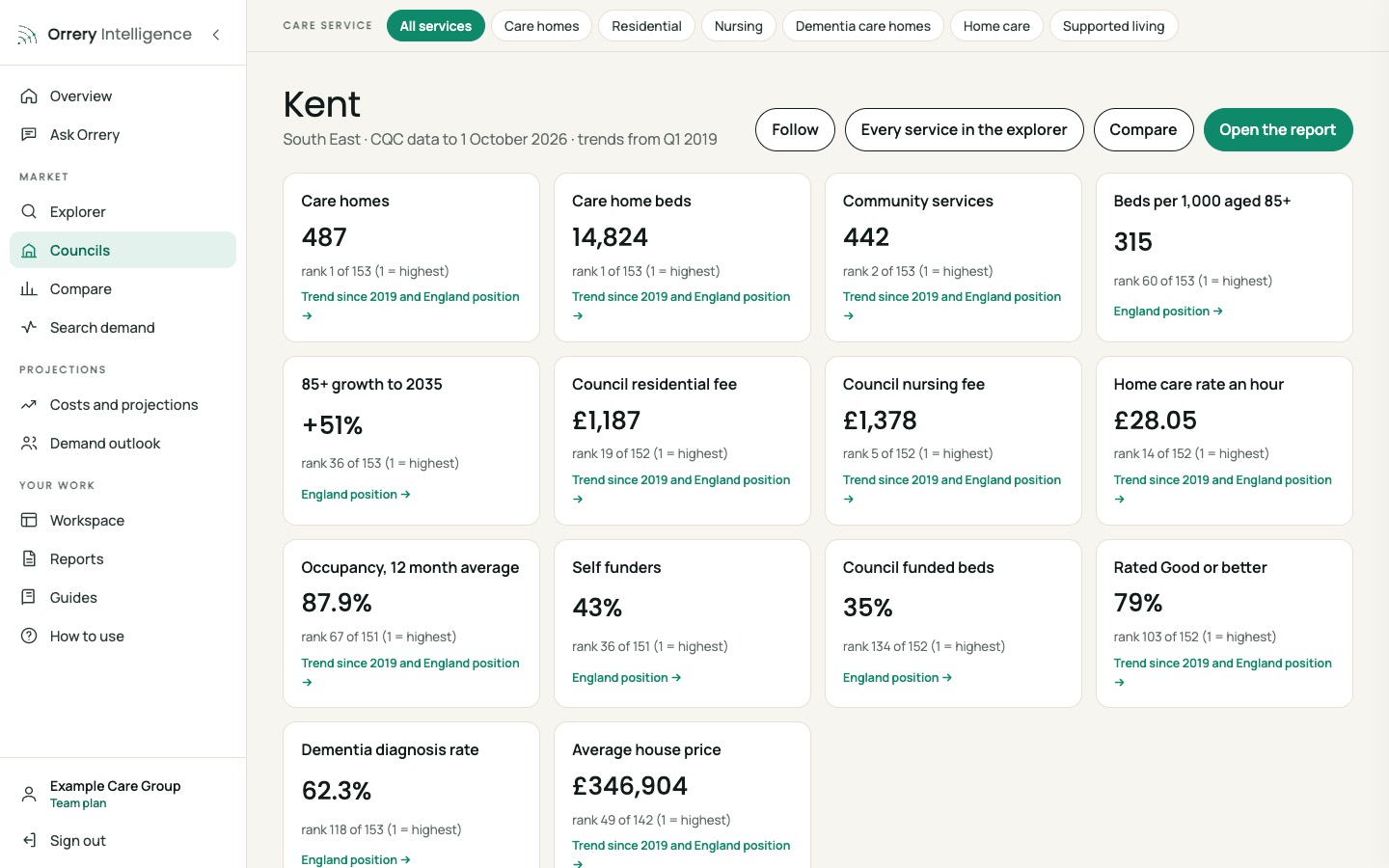
Occupancy, fees and supply trends for the context section of the plan.
The views you will use
Ask the data in plain English
A real question and answer from Ask Orrery, the assistant inside the platform, for a care home owner in Kent (October 2026). It answers only from Orrery's data and the subscriber's own documents, and shows its sources.
Answer: On Orrery's central case, a typical 60 bed Kent home earns slightly more next year. The downside takes that gain away.
Central case, 2027 (Orrery cost model, Kent fees):
- Income is £4.38m.
- EBITDARM is £1.23m, a 28.1% margin. EBITDARM is income less running costs, before rent, interest and central costs.
- This assumes 87.9% occupancy, council fees up 4% and pay up 4%.
Downside I tested: occupancy at 82%, council fee uplift of 2% and pay growth of 6%.
- 2027 EBITDARM is £1.07m, a 26.3% margin.
- That is about £167k below the central case.
- Costs then outgrow fees each year, and the margin falls to 22.0% by 2031.
Staff are 82% of running costs, so pay is the main risk. These are projections on stated assumptions, not forecasts. You can change the assumptions on the page. This is not financial advice.
- Budgets usually miss on occupancy and pay; test both.
Answer this for your own councils
Subscribers get every guide, chart and projection for all 153 councils, Ask Orrery, and every council report.
The Orrery platform opens to subscribers shortly. Register and we will tell you first.
Register for early access