Opening a dementia unit or converting beds
Is there enough dementia demand here, and in which setting?
Look at expected and diagnosed dementia, dementia registered beds and the nursing need of later stage dementia.
When people use it: When planning a conversion or a new wing.
How it works, step by step
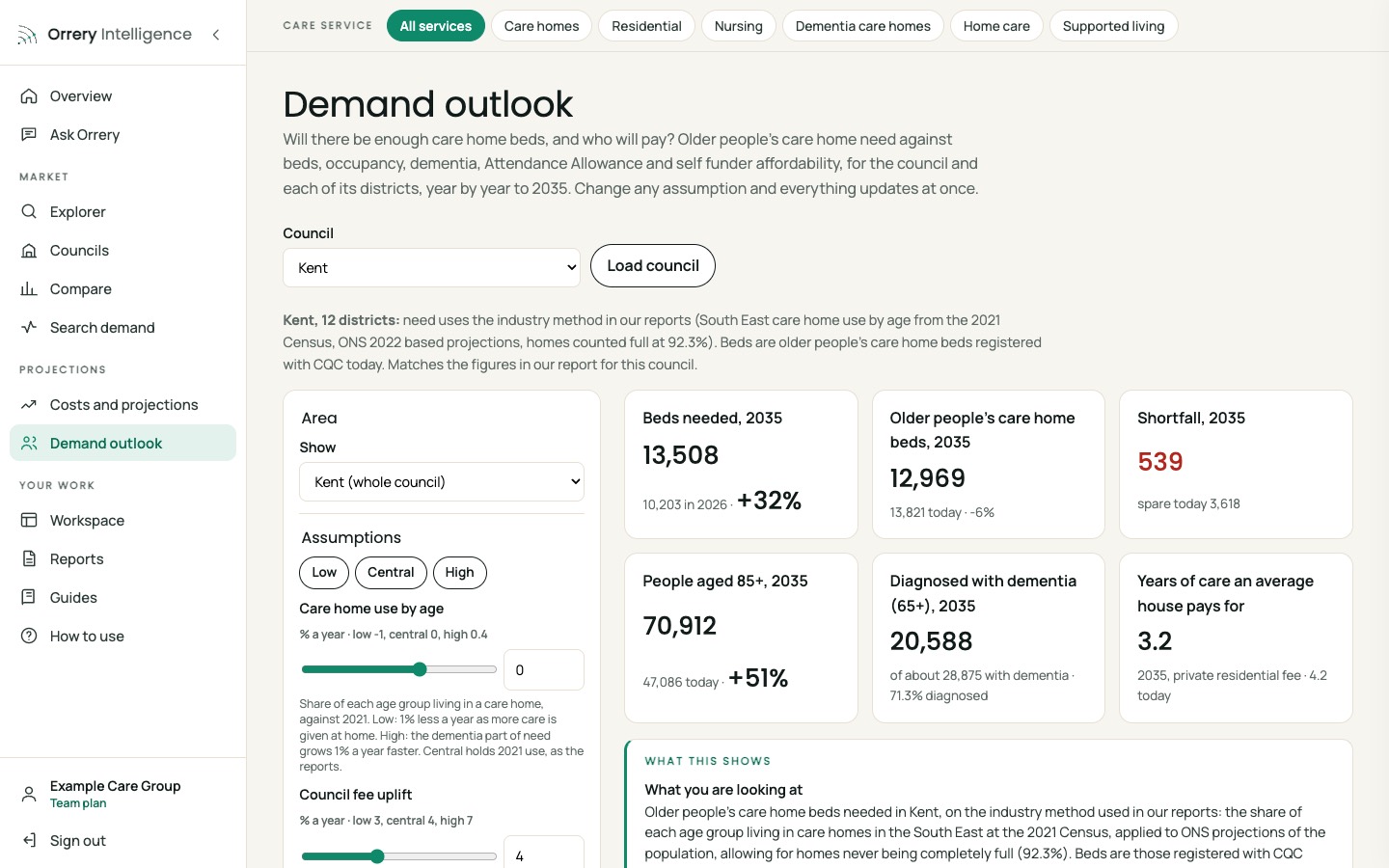
Dementia need against beds
Choose Dementia care homes in the care service bar: need against dementia registered beds, by district. The commentary shows people with dementia and how many are diagnosed.
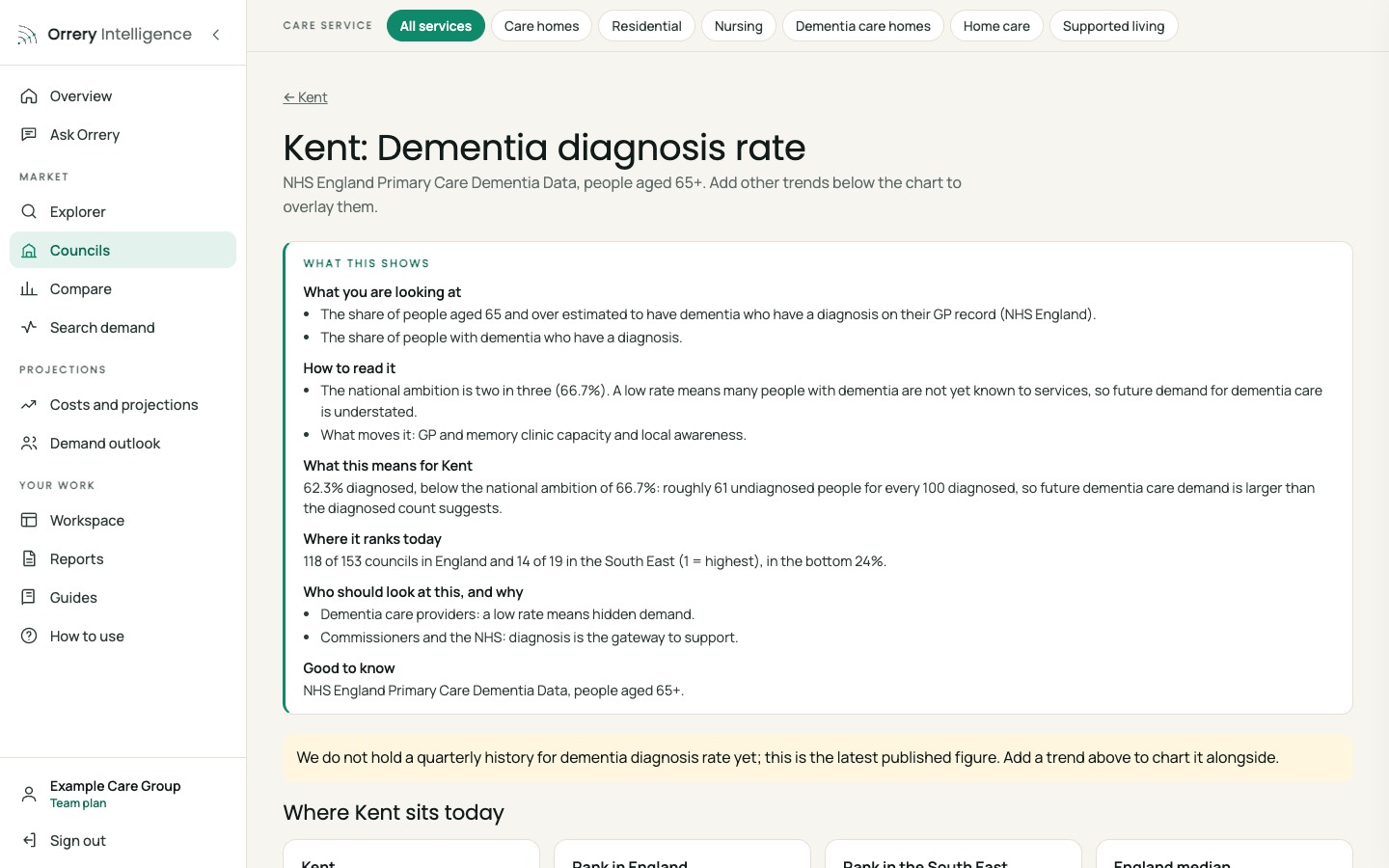
Diagnosis rate
Below the national ambition (66.7%) means hidden demand that will surface as diagnosis improves.
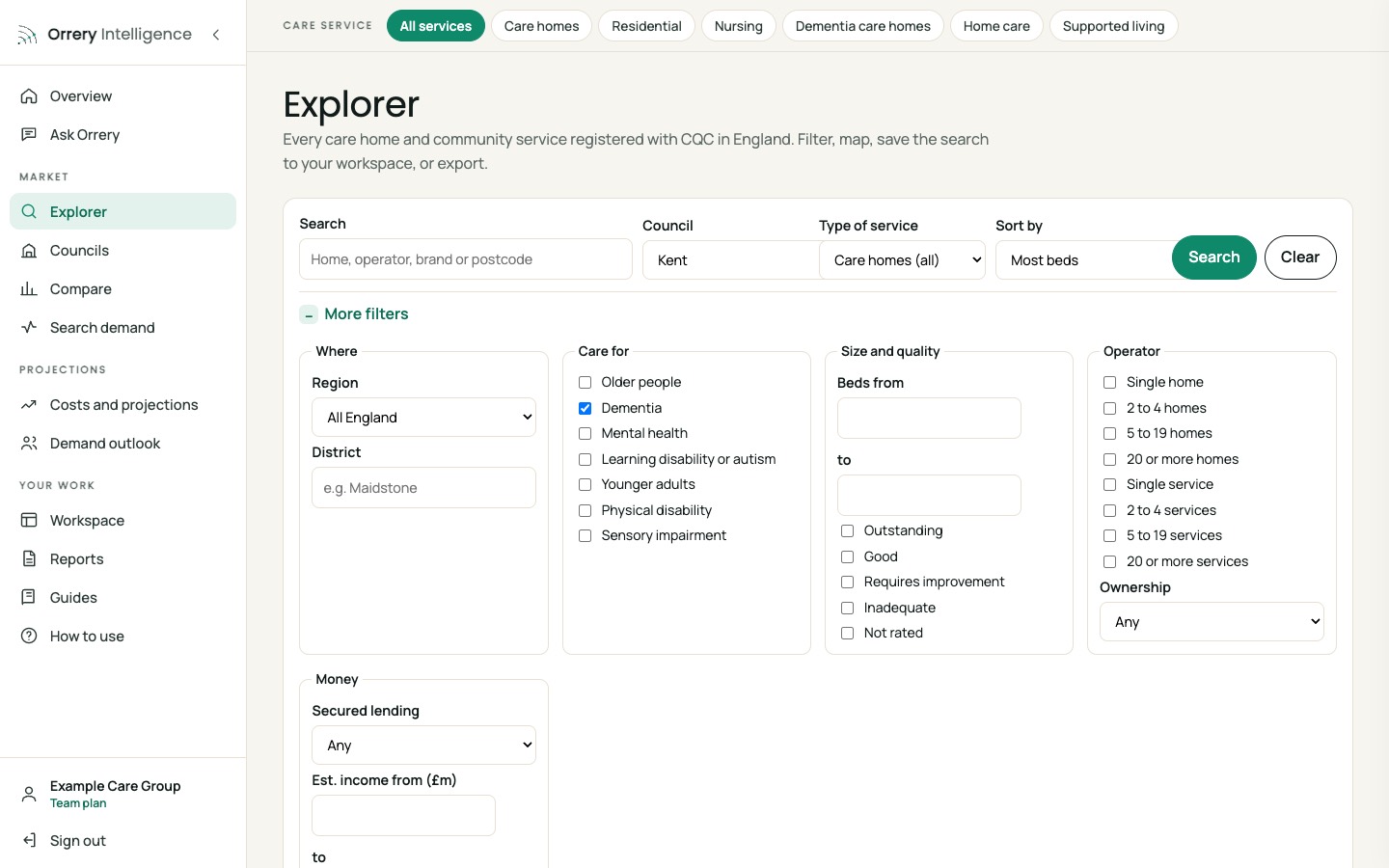
Existing dementia homes
Who offers dementia care today, their ratings and size; nursing and dementia together is the scarcest kind of bed.
The views you will use
Ask the data in plain English
A real question and answer from Ask Orrery, the assistant inside the platform, for a care home owner in Kent (October 2026). It answers only from Orrery's data and the subscriber's own documents, and shows its sources.
On these assumptions, no. Kent has more dementia beds than it needs.
- Orrery's demand model shows 10,624 registered dementia beds in 2026 against 4,214 needed. That is about 6,410 beds to spare.
- Need rises to 5,579 by 2035 as the 85+ population grows 51%. Beds fall to 9,969, so the surplus narrows to about 4,390.
- None of Kent's 12 districts is short by 2035. Ashford is tightest, with 82 beds to spare. Maidstone has the most spare, at 663.
The model uses 2021 Census care home use rates and counts all registered dementia-category beds. It may overstate the surplus, because it does not allow for beds that are unsuitable or hard to use. The results are projections on stated assumptions, not forecasts. You can change the assumptions on the page.
For operators, a new unit would mainly compete on quality, location or price, not on a gap in supply.
Sources: CQC care directory, ONS projections, Orrery demand model.
- Later stage dementia usually needs nursing care; a residential dementia unit serves earlier stages.
Answer this for your own councils
Subscribers get every guide, chart and projection for all 153 councils, Ask Orrery, and every council report.
The Orrery platform opens to subscribers shortly. Register and we will tell you first.
Register for early access