Financing an extension or refurbishment
Will more beds fill, and what will they add to the margin?
Check demand in your district, then model the extra beds year by year.
When people use it: When planning an extension, refurbishment or new wing.
How it works, step by step
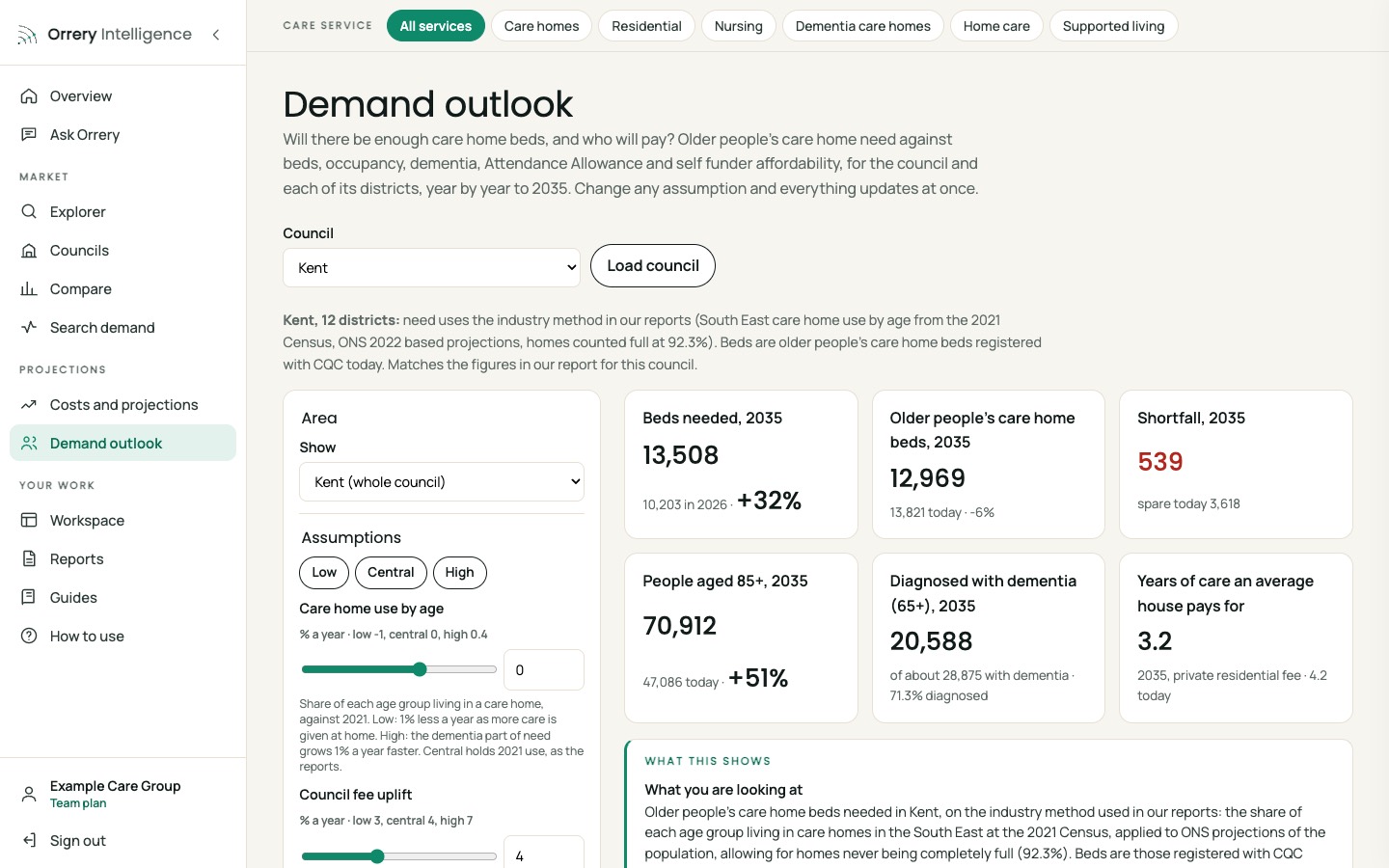
Demand in your district
Will the district be short of beds when the extension opens?
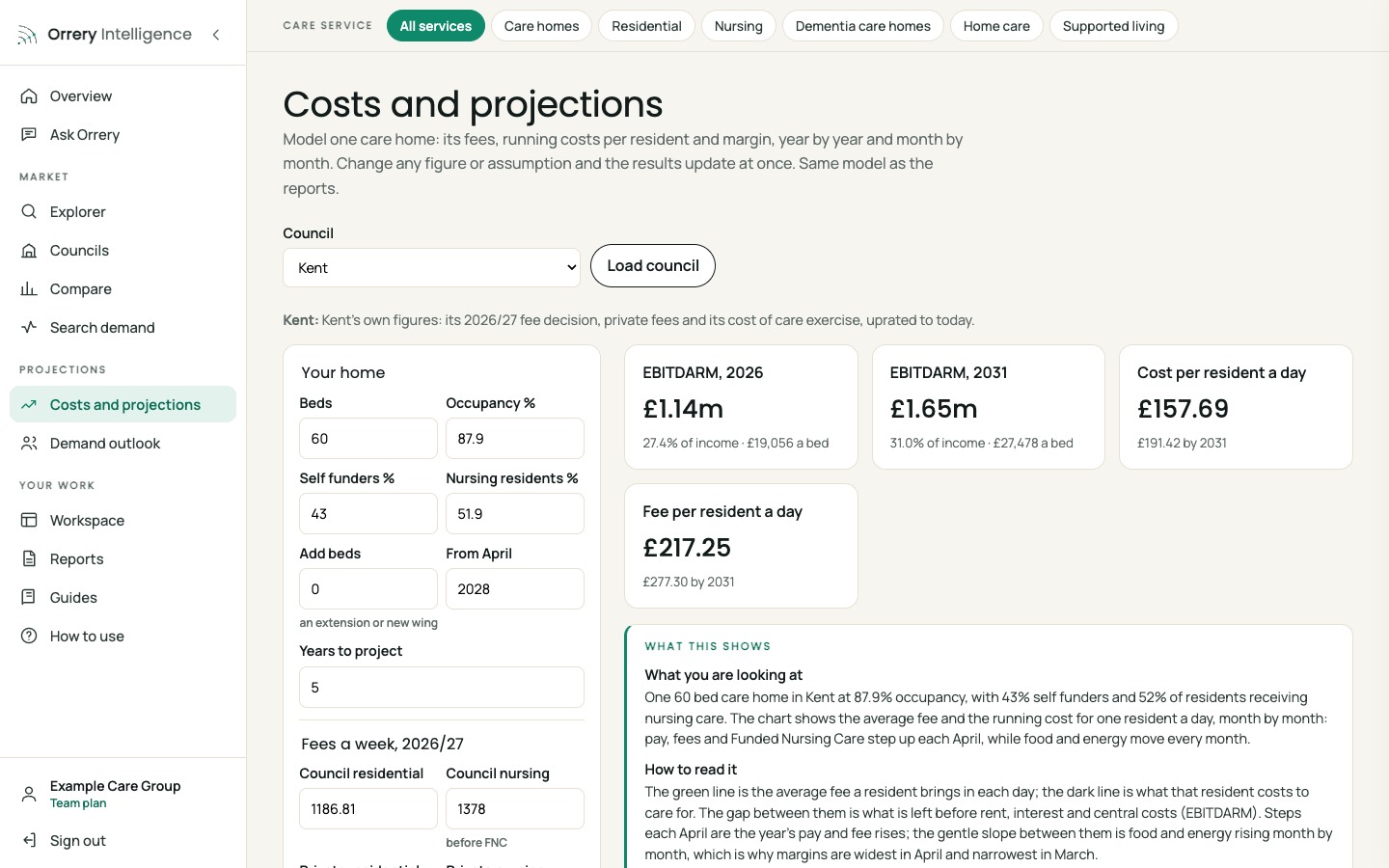
Model the extra beds
Use Add beds and From April; compare EBITDARM before and after.
The views you will use
Ask the data in plain English
A real question and answer from Ask Orrery, the assistant inside the platform, for a care home owner in Kent (October 2026). It answers only from Orrery's data and the subscriber's own documents, and shows its sources.
Probably yes, but slowly, and it depends on your district. The model shows ten extra beds adding about £191k a year to EBITDARM, but only if they fill like the rest of the home.
- Will they fill? Kent occupancy is 88.3% (Capacity Tracker, 2026 Q3), which is healthy. The Orrery demand model shows 3,618 spare beds across Kent today. It shows a shortfall of 539 beds by 2035. These are projections on stated assumptions, not forecasts. Districts differ: Ashford, Swale and Gravesham are tighter, while Canterbury, Thanet and Dartford have more spare beds.
- EBITDARM: the Orrery cost model compares a typical 60 bed home (£1.143m) with a 70 bed home (£1.334m). Both assume 87.9% occupancy and a 27.4% margin. In 2031 the gap is about £274k (£1.923m against £1.649m).
Ten beds would not be full on day one, so the first year would add less. You can change the assumptions on the page. Seek professional advice before deciding.
- New beds usually fill more slowly than existing ones; test lower occupancy in the first year.
Answer this for your own councils
Subscribers get every guide, chart and projection for all 153 councils, Ask Orrery, and every council report.
The Orrery platform opens to subscribers shortly. Register and we will tell you first.
Register for early access